
Dünyanın En İyi Online Casino Bonusları Ballonix’yi oyna çevrimiçi 2026'ya Kadar Tüm Seçeneklerimiz Arasından Seçim Yapın
Febbraio 19, 2026Vulkan Vegas Angeschlossen Spielsaal Rebellion casino apk login Deutschland 2000 Provision Erhalten
Febbraio 20, 2026Hermes Santorini sandals Craftsmanship Behind the Hstrap
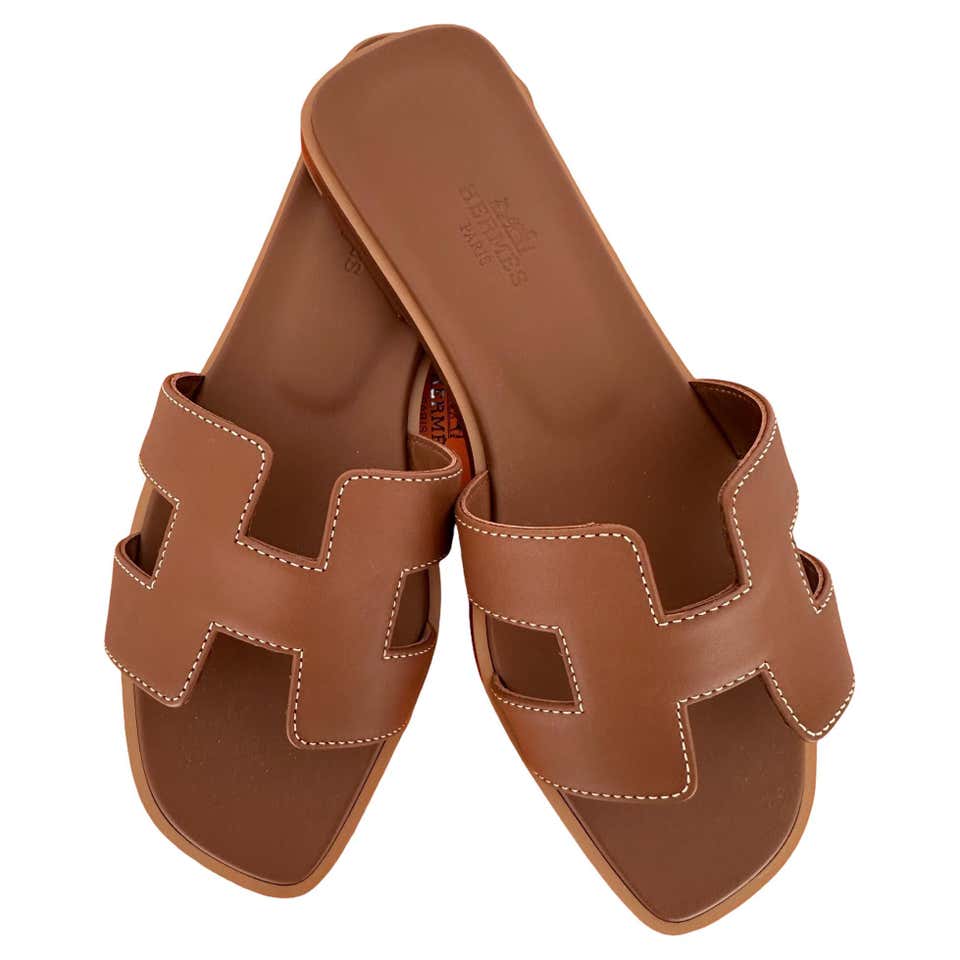
What makes the Hermès Santorini H-strap special?
The H-strap is the visual and structural signature that gives the Santorini its identity: a clean, architectural H cut that locks the forefoot with minimal hardware while keeping the line distinctly Hermès. On sight it reads as elegant restraint; in wear it performs as a precision component engineered for fit, balance and longevity. The defining difference from generic straps is the marriage of proportion, edge finishing and tension control—each H is cut, shaped and finished to sit flat against the foot without pinching or gaping. You can see the logo-language and feel the engineering: the H is not merely decorative, it is the strap’s load-bearing geometry. Knowing this reframes how you evaluate quality: check alignment of the H cut, edge sealing uniformity and how the strap meets the sole—those are the practical signs of craft behind the motif.
The Santorini’s H is intentionally broader at anchoring points and slimmer where it crosses the instep, which reduces pressure points while keeping a minimalist profile. Hermès maintains proportion consistency across sizes so the H reads the same on a size 35 and a 41; that demands careful pattern grading rather than simple scaling. This proportional discipline is why handcrafted corrections are often required during making: the leather behaves differently on each size and leather type, and artisans compensate by subtle reshaping and edge-work.
Another crucial difference is finishing: the H-strap edges are hand-burnished and sealed to a uniform sheen so they don’t fray or darken unevenly when exposed to sweat or sun. That edge finish also controls how the strap slides against skin and clothing, affecting comfort and wear marks. Finally, the way the strap is attached to the sole—hidden saddle-stitched, glued, or riveted—determines serviceability; Hermès favors methods that allow repairability, which extends usable life compared with bonded, unserviceable designs.
So, the H-strap’s value is a compound of geometry, material choice, finishing techniques and attach methods—each stage reduces variability so the final strap reads like a single, intentional object rather than three slapped-together pieces.
When you inspect a Santorini, focus on the symmetry of the H cut, the consistency of edge color, and whether tension points are reinforced. Those visible details hermes santorini sandals are shorthand for dozens of private, skilled interventions made during production.
Design language and the H silhouette
The H silhouette is a lesson in economy: it reduces a sandal’s visual vocabulary to one strong glyph while solving structural problems of hold and flexibility. Hermès uses the H not just as a brand stamp but as a balance device that distributes strap tension across the forefoot and instep. This makes the Santorini readable from afar and comfortable up close. The H also integrates with the sandal’s last and sole profile so the strap’s angle complements natural gait and toe flexion.
Designers choose the H width, cut depth and placement to achieve three objectives simultaneously: secure fit, minimal material distortion, and aesthetic proportion. Those choices vary by last (the foot-shaped mold used in shoemaking), so the same H pattern will be tweaked when mounted on a narrow vs. wide last. This is why two Santorini pairs in the same size can feel subtly different depending on the last used and the leather’s thickness.
Visual cues—edge paint color, micro-stitching along the strap edges, and any embossed markings—are all part of the design grammar. Hermès tends to minimize visible stitching on sandals, favoring internal stitching or hidden reinforcement to keep the H crisp. The brand also plays with negative space inside the H; the proportion of the cutout alters the perceived lightness of the shoe while influencing how air circulates around the foot.
These design decisions are tested in prototypes and wear trials: artisans and designers will often make multiple mock-ups in different leathers and adjust the H’s bevel, angle and finishing until it meets comfort and aesthetic targets. The result is a deceptively simple strap that is the product of iterative, hands-on problem solving.
Understanding this clarifies why repairing or replicating the H is hard: it is not a generic strap but a calibrated component integrated into the shoe’s whole mechanical system.
Which leathers and components are used in the H-strap?
The H-strap is typically cut from high-grade calf and kid leathers chosen for a balance of structure and suppleness; Hermès selects leather types based on grain, tannage and thickness to match the design intent. Common choices include box calf for a glossy, firm look; Epsom for scratch resistance and rigidity; and Swift or lamb for soft drape. Each leather behaves differently during cutting, edge-beveling and burnishing, and artisans choose adhesives and edge coatings to match.
Beyond leather, components include a lining leather (for internal comfort and reinforcement), edge paint or lacquer, a thin reinforcement layer where the strap meets the sole, and metal hardware when present. Soles are usually leather-based with a protective rubber half-sole applied in many models; the attachment method—hidden stitching, blind-stitch or adhesive—affects the strap’s long-term orientation. Quality control includes checking leather tannage uniformity and matching strap pairs for color and grain consistency.
Below is a concise comparison of common leathers used for H-straps and the practical trade-offs to expect when you wear them.
| Leather | Texture & Look | Wear Characteristics | Maintenance |
|---|---|---|---|
| Box Calf | Smooth, glossy | Holds shape, resists creasing | Wipe clean, occasional polish |
| Epsom | Embossed, rigid | Scratch-resistant, stable edges | Low maintenance, avoid oil-based products |
| Swift / Lamb | Soft, matte | Develops patina, shows scuffs | Gentle cleaning, light conditioning |
| Vachetta (natural) | Untreated, light | Darkens over time, absorbs moisture | Protect from water, minimal conditioning |
Choosing the right leather is practical: if you want minimal maintenance and crisp edges, Epsom or box calf is the sensible pick; if you prefer a soft, living patina, go for Swift or lamb. The artisan’s job is to tailor cutting thickness and edge treatment so the leather performs as intended within the H geometry.
Colour matching is also a specialist task: straps are paired by shade and grain, and edge paint is custom-matched to avoid a visible seam where strap edge meets face leather.
Handcraft steps: from pattern to finished strap
The production of an H-strap combines precision patterning, careful cutting, reinforcement, edge finishing and final anchoring to the sole. Work begins with pattern grading, followed by hand-cutting the H from whole hides to minimize seams and avoid weak points. That first cut is crucial because the H’s negative space must align perfectly with the foot’s anatomy and the last.
After cutting, the strap receives a reinforcement layer where stress concentrates, then a lining is glued and skived (thinned) at edges to reduce bulk. Edges are then bevelled with a hand tool, burnished to compress fibers, and coated with a proprietary edge lacquer to seal and color-match. Attachment follows: depending on the model the strap is sewn, blind-stitched into the midsole, or fixed with reinforced tabs and adhesive; where stitching is used, artisans often employ saddle stitch techniques for strength and repairability.
Quality control runs alongside each step: pattern alignment checks, colorfastness tests, tensile tests on reinforcements, and fit trials on lasts. Artisans correct tension inconsistencies by re-tensioning or re-shaping the strap with a hot-stretch process that is tightly controlled so the leather does not over-stretch. Final finishing includes hand-polishing, embossing of any markings, and inspection for consistent edge color and seam invisibility.
Little-known facts about this process are revealing: Hermès’ leatherworkers (selliers) often train for years on bench saddlery before working on footwear; prototype straps undergo wear trials to emulate months of use; edge lacquers are mixed to batch specifications; and repair-friendly construction is a deliberate design choice to extend product life.
\”Expert Tip: Never attempt to glue a detached H-strap yourself; improper adhesive or over-clamping can stiffen the leather and distort the H geometry. Take the shoe to a professional cobbler who will re-stitch or re-attach with thin linen thread and matched adhesive—this preserves tension and allows future repairs.\”
Fit, longevity and how artisans test the H-strap
Fit is tested through both objective measures and live-wear feedback: artisans mount straps on lasts and measure clearance at the instep, contact points at the toe crease, and pressure distribution across the forefoot. Those metrics predict how the H will behave on a range of foot shapes. Live-wear trials then validate the data, with adjustments made for leather stretch and break-in behavior.
Longevity depends on material choice, finishing quality and user care. A well-made H-strap resists deformation because of reinforcement at stress points and consistent edge sealing; even if scuffed, a strap with good structure can be retreated and recolored. Hermès’ approach historically favors repairability—stitched anchoring and accessible seams—allowing cobblers to replace soles or re-affix straps without destroying the upper.
Artisans simulate environmental stress: humidity cycles, repeated flexing, and localized abrasion tests to ensure straps keep shape and color. They also assess long-term look by artificially aging samples to see how edge paint and leather patina evolve. These tests are why some leathers are recommended for heavy use and others for occasional, fashion-forward wear.
For users, maintenance routines—store flat, avoid prolonged moisture, condition sparingly on soft leathers—protect the H’s geometry more than frequent polishing. If a strap starts to gape or show uneven wear, professional intervention can often restore original tension and appearance without compromising design intent.
Understanding the craft behind the H-strap changes how you care for and evaluate a pair: look for structural choices that enable repair, inspect finishes for uniformity, and match leather type to expected use to preserve the strap’s engineered balance over years of wear.
